

Japan-easy
★ 0.0•2016•2 Seasons•ANIME
Learn useful phrases and cool kanji through these 15-minute programs, and you'll realize that "Japanese is easy!"
Advertisement
Episodes
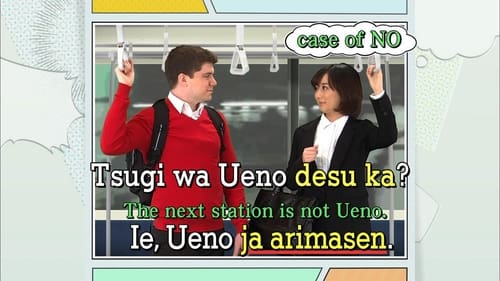
1. Basic sentences: A is B (Part 1)
15m"Next is Ueno Station", in Japanese is "Tsugi wa Ueno desu". Ending a sentence with "desu" is a basic pattern, so how about using this pattern in various situations, and taking the first step towards communicating in Japanese?
Aired: 4/10/2016
2. Basic sentences: A is B (Part 2)
15mWhen saying "My name is Tanaka", in Japanese, after the part that means "My name", we put "wa" particle. If the other person's name is also Tanaka, "wa" particle replaces "mo" article. Mastering this rule can take your Japanese one step further.
Aired: 4/17/2016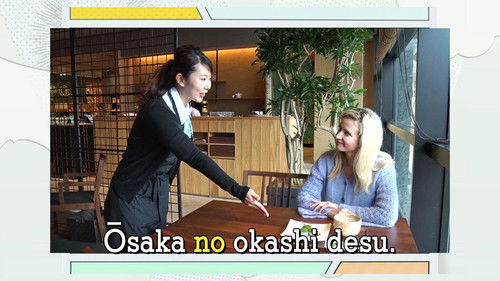
3. Talking about ownership
15mToday, we will focus on "no", the article used between 2 nouns. By saying "A no B", you're saying that A owns B. When the video is over, you'll learn various expressions that have "no" article.
Aired: 4/24/2016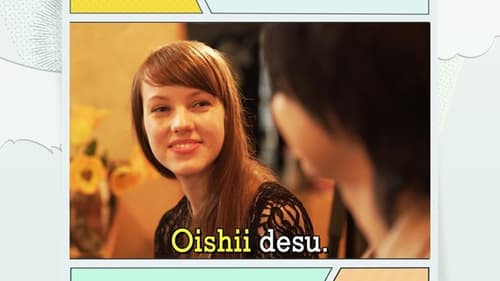
4. Expressing your impressions or feelings
15mToday, we'll learn how to express our impressions or feelings by using adjectives such as "oishii" (tasty), "kireina" (beautiful), "shizukana" (quiet or calm) and so on. In the Phrase-easy segment, we'll introduce "Itadakimasu", the phrase we say before meals.
Aired: 5/8/2016
5. Words like this, that, and it
15mIn this episode, we'll focus on "kore", "sore" and "are", 3 words that correspond to "this", "it" and "that". We'll learn the basic usage of these words, and then move on to "dore", a word used to ask about one item among several.
Aired: 5/15/2016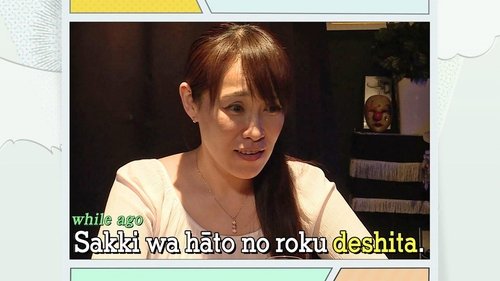
6. Past sentences (Part 1)
15mIn this episode, we'll learn the word "deshita", which refers to the past. This word helps us to share our personal experiences with others. We'll also learn the word "daijobu", one of the most commonly used words in daily Japanese conversations.
Aired: 5/22/2016
7. Past sentences (Part 2)
15mIn this episode, we'll focus on "deshita", a word we can use when expressing past feelings or impressions. We'll also look at a common sentence pattern: na-adjectives + "deshita".
Aired: 5/29/2016
8. Negative sentences
15mIn this episode, we'll focus on the negative form of adjectives. For example, the phrase "oishi desu", meaning "(It) is delicious", becomes "oishiku nai desu", meaning "(It) is not delicious".
Aired: 6/5/2016
9. Talking about action (Part 1)
15mIn this episode, we'll go over verbs that express action. For example, to run is "hashiri masu", to eat is "tabe masu". And to eat something becomes "…o tabe masu".
Aired: 6/12/2016
10. Talking about action (Part 2)
15mToday's expressions are "ikimasu", meaning "to go", and "kimasu", meaning "to come". We'll also learn how to make a sentence using the words "e" to express destinations, "ni" to say the time and "de" to describe the method of transportation. In the kanji corner we'll look at kanji that express numbers.
Aired: 6/19/2016
11. Talking about action (Part 3)
15mToday, we'll learn the past tense and negative forms of verbs by watching Japan's national sport - sumo. As we've learned before, when saying what time an action takes place, you add "ni" after the time.
Aired: 6/26/2016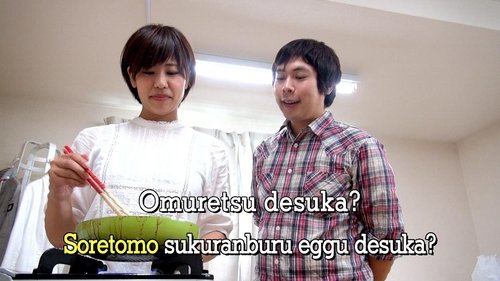
12. Asking if something is A or B
15mToday, we'll learn how to ask whether something is either A or B. "Omuretsu desuka? Soretomo sukuranburu eggu desuka?" The word "soretomo" is similar to the word "or" in English. When presenting another option, we use "soretomo".
Aired: 7/3/2016
13. Saying that someone is there
15mToday, we will learn how to talk about something you find or see. Detective Michael heads to the secret hideout of a dangerous criminal. He finds some clues to solve the crime, and then he talks to his partner over the radio. Take a look at how he tells his partner about what he saw and what is there.
Aired: 7/17/2016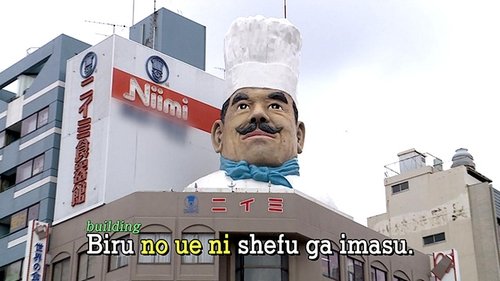
14. Saying that something is there
15mToday, we'll learn how to explain in detail where something or someone is. This lady is meeting her boyfriend in Asakusa. Let's check out their conversation about going shopping. There are some words that describe position in their conversation. Let's check it out.
Aired: 7/24/2016
15. Saying you're sick
15mToday, we'll learn about how to talk about our health and how we're feeling. In the video, a man tells the doctor that he has a headache and a fever. And a woman tells the doctor that her stomach hurts. Communication with the doctor is very important for an appropriate diagnosis. Let's learn how we can tell someone about the various ways we might feel.
Aired: 7/31/2016
16. Expressing what you want
15mToday, we're going to go over some expressions used to say that you want something. One afternoon, a couple is watching a TV shopping show. The wife sees a white refrigerator, and she says, "I want that". But they just bought a new refrigerator one week ago... Let's see how the husband responds to his dear wife's wish.
Aired: 9/4/2016
17. Expressing what you want to do
15mToday, we'll go over how to express your desire and to say you want something. In the video, a couple is on a date at Tokyo Tower. The man asks the woman what she wants, and he grants her wishes one after another, to her delight. Let's see how they express their desires and explain what they want.
Aired: 9/11/2016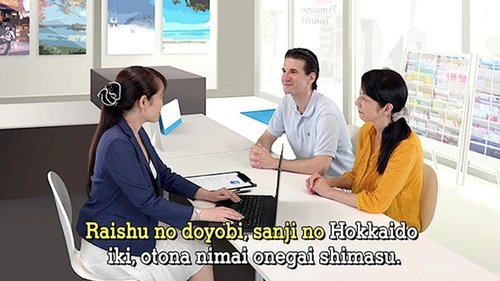
18. Using time words
15mToday we'll learn how to talk about the past, like yesterday and the day before. In the video, detective Michael is investigating a crime that occurred 3 days ago. He asks the suspect what he has been doing in the past few days. Will Detective Michael be able to find the culprit? Let's see what happens!
Aired: 9/18/2016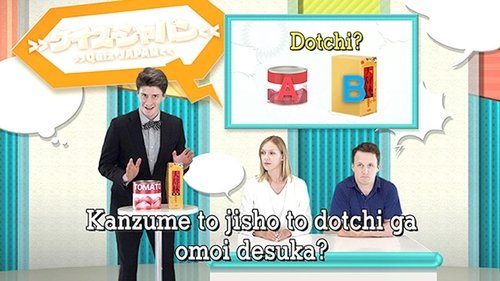
19. Comparing two things
15mToday we'll learn how to compare two items and how to choose one of several items. When comparing two items, we use the word "docchi". And when choosing one of several options, we use the word "dore". In English, both words can probably be translated as "which". In the video, the quizmaster asks questions to that require comparing and selecting. Let's focus at the conversation between him and the contestants.
Aired: 9/25/2016
20. Inviting someone to do something
15mToday we'll learn to make a suggestion to someone by adding "ka" to the negative form of a verb. In the video, a man wants to invite that he and his colleagues all go to dinner together. "Ikimasu" means "go". The negative form of "ikimasu" is "ikimasen". Let's check out the video to see how it's used.
Aired: 10/2/2016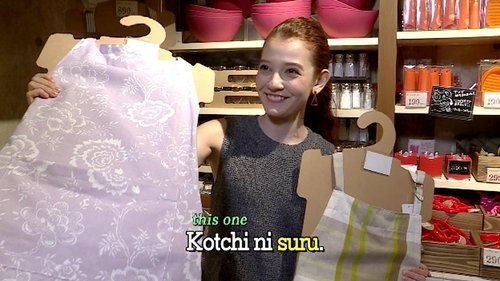
21. Formal and casual ways of talking
15mToday we'll learn about the polite and casual ways of speaking. First, let's look about the verb for "do" as in "to do something". In this case "shimasu" is polite and "suru" is the casual form. Now let's watch the video and focus on how these words are used.
Aired: 10/9/2016
22. Talking about giving and receiving (Part 1)
15mToday we'll learn expressions used when giving and receiving something. "Agemasu" means "to give" in English, and "moraimasu" means "to receive". And there's another expression for receiving things: "kuremasu". Now let's watch the video and see how these expressions are used.
Aired: 10/16/2016
23. Talking about giving and receiving (Part 2)
15mIn this episode, we will learn 2 common endings for verbs: "kureru" and "ageru". "Kureru" is mostly used when someone gives you something. "Ageru" is used mostly when you give something to someone. The word "kau" means "to buy", so "kattekureru" is often used when someone buys you something, and "katteageru" is often used when you buy something for someone. So now learn more about this expressions from the video!
Aired: 10/23/2016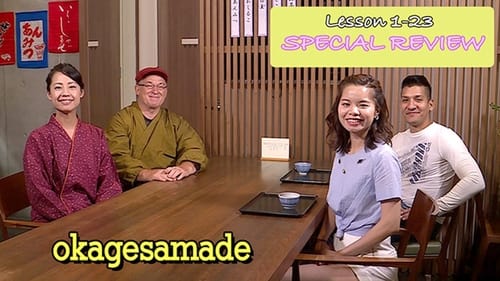
24. Review
15mIn this episode, Detective Michael uses several of the expressions that we've learned. First, he uses the expression "desu" to ask about the type of ramen the man is eating. Let's listen for both the question form and the negative form in the conversation. In the next scene, let's check out how to use "ano", "kono" and "asoko" to describe the position of something. Finally, let's review how to express a desire and how to invite someone. Can Detective Michael invite his wife to Tokyo Tower? Let's enjoy the story and review what we've learned so far!
Aired: 10/30/2016Recommended Anime











Advertisement








Similar Anime



Advertisement
Reviews (0)
Advertisement