NodWatch

A personal movie and TV streaming app built for educational purposes. Powered by TMDB API.

Privacy PolicyTerms of ServiceCookie PolicyReport Issue

© 2026 NodWatch. All rights reserved.

Hippo: Wild Feast Live

Hippo: Wild Feast Live

★ 0.0•2011•1 Seasons•ANIME
Documentary

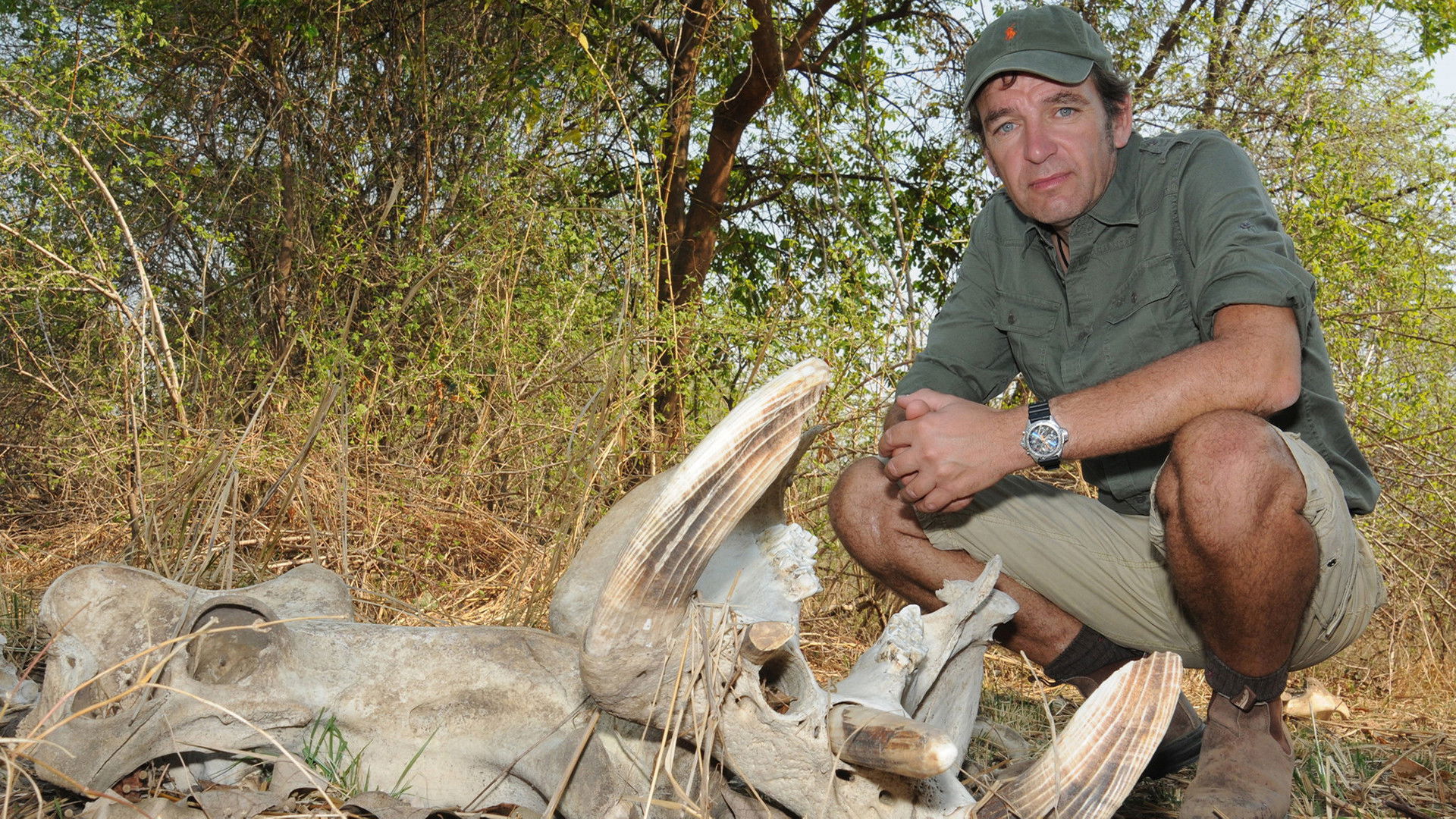
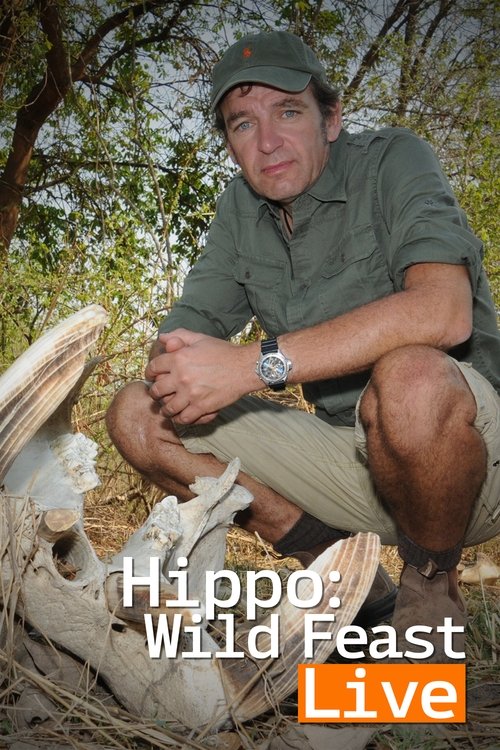
Hippo: Wild Feast Live brings you an amazing insight into the rarely-seen world of nature's food chain...LIVE! Bringing the food chain to life, this live experiment allows you to watch as an entire ecological system emerges around the enormous Hippo carcass. Streamed 24/7 using a host of cutting edge technology, we'll present the food chain in action live as the wild animals of Africa come to feast.

Advertisement

Top Cast

Mark Evans

Mark Evans

Presenter

Episodes

No Preview

1. Hippo: Life After Death

45m

Hippo: Wild Feast Live will document this extraordinary event for seven days. You can watch live online around the clock and tune in daily every evening for a quick update from our presenter in the field, Mark Evans.

Aired: 10/20/2011
No Preview

2. Day 1

45m

The hippo is bloated with the gases that build up inside it because of bacteria in the digestive system. Blow flies will already have entered the carcass to lay their eggs, and frogs have been feeding on these insects. Other scavengers such as crocodiles are nearby, the team counted 56 crocodiles in the river last night. Large carnivores such as lions may try to monopolize the carcass, hyenas are unlikely to take on and drive away male lions. The webcam will be in black and white during the night when infra red cameras are used to film in the low light.

Recommended Anime
Animal
★ 8.02021

Animal

Natural World
★ 7.41983

Natural World

Planet Earth II
★ 8.62016

Planet Earth II

Earth at Night in Colour
★ 8.12020

Earth at Night in Colour

Life on Our Planet
★ 8.02023

Life on Our Planet

Chimp Empire
★ 8.02023

Chimp Empire

Planet Earth III
★ 8.52023

Planet Earth III

Planet Earth
★ 8.62006

Planet Earth

Nature's Great Events
★ 8.42009

Nature's Great Events

Great Migrations
★ 7.72010

Great Migrations

Prehistoric Planet
★ 8.32022

Prehistoric Planet

Advertisement
The Crocodile Hunter
★ 7.61997

The Crocodile Hunter

Our Planet
★ 8.52019

Our Planet

Man vs. Wild
★ 7.02006

Man vs. Wild

History 101
★ 7.12020

History 101

Savage Kingdom
★ 7.82016

Savage Kingdom

Spy in the Wild
★ 7.02017

Spy in the Wild

Attenborough's Life in Colour
★ 7.72021

Attenborough's Life in Colour

Walking with Dinosaurs
★ 7.02025

Walking with Dinosaurs

Similar Anime

The Wild Canadian Year
★ NR2017

The Wild Canadian Year

Evolution Earth
★ 8.52023

Evolution Earth

Den stora älgvandringen
★ 7.02019

Den stora älgvandringen

Chased by Dinosaurs
★ 6.82002

Chased by Dinosaurs

Cities: Nature's New Wild
★ 8.22018

Cities: Nature's New Wild

Eyewitness
★ 7.01995

Eyewitness

Wonders of the Ocean
★ 8.02019

Wonders of the Ocean

Planet Earth
★ 8.62006

Planet Earth

Into the Wild: India
★ 7.02020

Into the Wild: India

Wild France with Ray Mears
★ NR2016

Wild France with Ray Mears

Wild Russia
★ 8.12008

Wild Russia

Advertisement
Lost Treasures of the Maya
★ 8.32019

Lost Treasures of the Maya

Wild Faces of Switzerland
★ NR2017

Wild Faces of Switzerland

Life in Cold Blood
★ 8.42008

Life in Cold Blood

Expedition Borneo
★ 9.02007

Expedition Borneo

La Suisse des lacs
★ 8.02021

La Suisse des lacs

Final Chance to Save
★ NR2005

Final Chance to Save

Islands in Time: A Wildlife Odyssey
★ 8.02017

Islands in Time: A Wildlife Odyssey

★ NR2009

Cesty do krajin půlnočního slunce

Equator from the Air
★ 6.02019

Equator from the Air

Advertisement

Reviews (0)

Advertisement
Aired: 10/21/2011
No Preview

3. Day 2

45m

Mark has counted 36 vultures on the carcass, these are hooded and white-backed vultures. The vultures are feeding on the soft parts of the hippo's head as the skin elsewhere will be tough to break through. A marabou stork is looking on. Crocodiles have come out of the river where they were seen last night and are gathering next to the carcass. They are feeding from the back end of the hippo around the anus, another soft part of the body. The carcass has begun to putrefy and the hippo's body is secreting liquid from the anus, penis and mouth.

Aired: 10/22/2011
No Preview

4. Day 3

45m

A mass of vultures is now on the hippo. Crocodiles and hyenas managed to break into the carcass last night by tugging at the front leg. The vultures are now largely congregating around the stump where they can reach inside the body to feed. The hippo has begun to deflate as gases and fluids seep out into the surrounding area. Oxygen entering the body will help maggots and other larvae on the inside. The smell coming from the carcass will get stronger.

Aired: 10/23/2011
No Preview

5. Day 4

45m

Though the hippo looks dried out there is still plenty of food inside and the crocodiles have been stretching into the cavity to feed. Many insects also feed at night, including crickets. Some crickets are predatory and eat the maggots around the carcass whereas others stay on the carcass itself. The smell of the decomposing carcass is caused by bacteria which produce gases. These gases travel huge distances and attract insects which sense them using their antennae. There could be 100 different insect species on the carcass.

Aired: 10/24/2011
No Preview

6. Day 5

45m

Vultures and marabou storks are once again on the carcass which has been decimated by hyenas and crocodiles feeding through the night. Several other bird species have been spotted around the carcass feeding on flies, maggots and other insects. The larger white-backed vultures eat the meat while the smaller hooded vultures tend to feed on the maggots. When the maggots are ready to pupate they will migrate en masse from the carcass into the surrounding soil.

Aired: 10/25/2011
No Preview

7. Day 6

45m

There seems to be very little left of the carcass but it is still covered in invertebrates such as hide beetles which feed on the dry tissue. Hooded vultures are pecking at these and other insects. African sacred ibises have also come to the carcass, they use their long, curved beaks to probe down into the ground to find insects in the soil. Marabou storks and white-backed vultures are still managing to feed on what meat remains.

Aired: 10/26/2011
No Preview

8. The Full Story

45m

A new high-tech natural history event, Hippo: The Wild Feast presents the most comprehensive illustration to date of nature's food chain in action. The programme, anchored live from Zambia's Luangwa Valley, shows the events of a fortnight as an entire ecological system including predators, scavengers, birds and insects consume the enormous carcass of an adult hippo. Located by a section of the Luangwa river, a prime location for some of the biggest predators in Zambia, the hippo has been in the sights of the notoriously vicious honey badger, leopards, lions, Nile crocodiles, hyenas, wild dogs, baboons, monitor lizards and marabou storks: known as the 'undertaker birds' and which use their 10-foot wingspan to swoop down and see off other smaller vultures. Presenter Mark Evans speaks to animal and entomology experts and local guides about the animals' behaviour and biological decomposition. With the potential for fierce showdowns between rivals for these vital calories, Evans explains the different eating mechanisms of the animals: from crocodiles, who use each other as leverage for a 'death roll' to twist off the meat, to marabou storks, who gulp down pounds of flesh, which they store in their gullets. The programme also features footage from the dens of predators, staked out by specialist wildlife cameramen.

Aired: 11/7/2011