
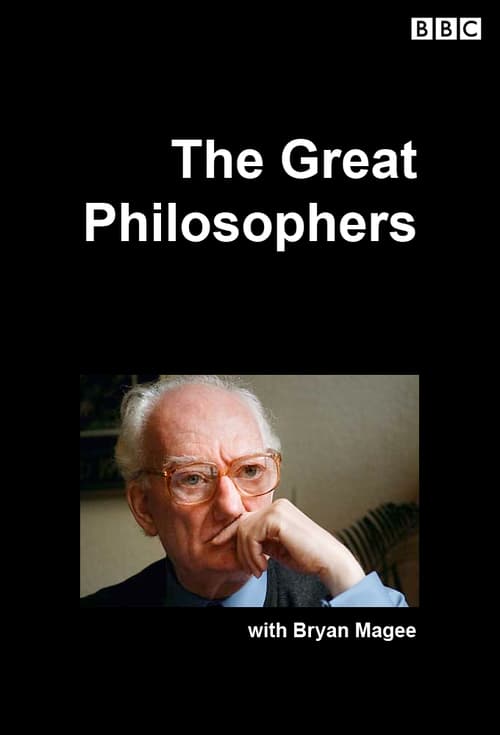
The Great Philosophers
★ 6.0•1987•1 Seasons•ANIME
Talk
Bryan Magee traces the history of western philosophy over two millennia, discussing the ideas of the past with an expert guest or contemporary philosopher.
Advertisement
Top Cast
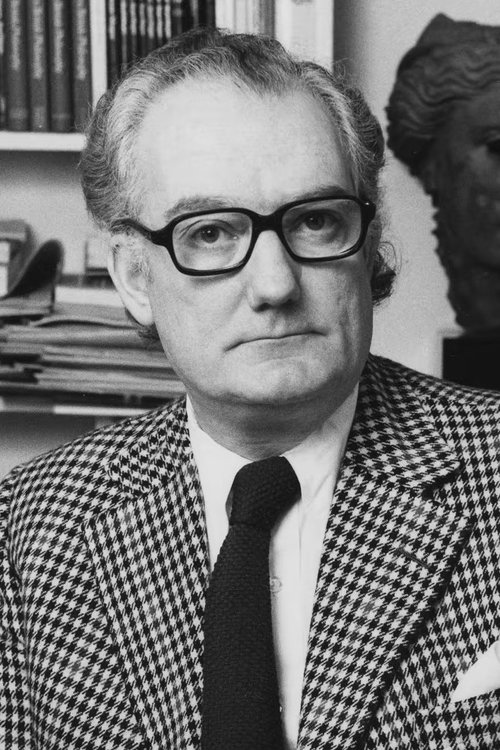
Bryan Magee
Host
Episodes

1. Plato
43mThe dialogues of Plato are analyzed in this program by Cambridge philosophy professor Miles Burnyeat. Seeing Plato's ideas initially as extensions of those of his teacher, Socrates, Burnyeat explains the development and content of Plato's original; doctrines of knowledge as virtue, the immortality and tripartite division of the soul, and the theory of forms (ideas). Plato's political philosophy is discussed within the context of the notion of the ideal state—a political utopia ruled by philosopher kings.
Aired: 9/6/1987
2. Aristotle
43mIn this program, the far-reaching philosophical ideas of Plato's star pupil are examined by noted Brown University professor Martha Nussbaum. Aristotle overcomes Plato's dualism of the intelligible and sensible worlds with his principle of inseparable nature of eternal matter and form. The principles of potentiality and actuality are examined, along with Aristotle's theory of the four causes—material, formal, efficient, and final—which account for changes in all things. These theories of constancy and change are credited with the progress of scientific inquiry over the ages.
Aired: 9/13/1987
3. Medieval Philosophy
43mThis program examines the ideas of the medieval philosophic theologians, particularly St. Thomas Aquinas. Oxford medieval philosopher Anthony Kenny discusses Aristotelian logic as the basis of Aquinas' thought, and disputes charges that medieval philosophy merely reinforced extant Christian views. Logical methods employed by Aquinas are discussed as precursors of the scientific methodology of later philosophers, such as Descartes.
Aired: 9/20/1987
4. Descartes
43mI think, therefore I am. Rationalist philosopher and mathematician René Decartes, considered the father of modern philosophy, held this as self-evidently true. In this program, Bernard Williams of Kings College examines Decartes' theory of knowledge and his use of skeptical inquiry to affirm reality, including the existence of God. Descartes' theory of physical and mental substances, and Cartesian dualism—which allows the concept of science to coexist with the notion of God—are examined.
Aired: 10/4/1987
5. Spinoza and Leibniz
43mThe ideas of rationalist philosophers Baruch Spinoza and Gottfried Leibniz are examined in this program by philosophy Anthony Quinton. Spinoza favors a pantheistic God who has matter and mind as two attributes, and who is the ultimate substance and explanation of the world. Leibniz sees the real world as consisting of an infinity of things purely spiritual, where everything, including space, is a phenomenon—a by-product of areal world with an infinite array of spiritual centers. Both philosophers construct a world that is very different form what the average person perceives, and both reject Cartesian duality.
Aired: 10/11/1987
6. Locke and Berkeley
43mThis program examines the philosophies of British empiricists John Locke and George Berkeley. Philosopher Michael Ayers of Oxford interprets Locke's skeptical theory that all knowledge is sensory and speculative, and that the true nature of the world can never be known as an attack on Descartes' theory of innate ideas. Conversely, Berkeley insists that we cannot have sensory knowledge of material substances because the exist only in the mind. Even the laws of nature, Berkeley says are merely the regularities of our own perceptions or ideas.
Aired: 10/18/1987
7. Hume
41mThe leading philosopher of the Scottish Enlightenment, David Hume, is the subject of this program. In it, expert John Passmore of the National Australian University discusses causality as the cornerstone of Hume's philosophy. Also discussed are three of Hume's basic philosophical views:anything that is not a fact, is illusion; judgments on fact mist be based on concrete experience; and all knowledge is imperfect. Hume also denies the idea of a continuous identical self, refutes deism, and views reason as a slave to passion.
Aired: 10/25/1987
8. Kant
42mContemporary philosopher Geoffrey Warnock discusses the philosophy of anti-empiricist Immanuel Kant, and his view that activities and powers within the mind are the key to knowledge, and that all knowledge is appearance. Knowledge for Kant, is a complex affair, in which knowing is acquired not just through the senses, but through pure concepts of understanding indigenous to the mind. Countering Hume, Kant insists it is the mind, not the senses, which unifies and organizes sensory flow into meaning full definitions of things.
Aired: 11/1/1987
9. Hegel and Marx
43mIn this program, contemporary philosopher Peter Singer discusses rational Hegelian philosophy, and the historicism and organicism at its root. Hegel's theories of absolute idealism and of a dialectic, emphasize history in their development of a model of reality. His concept of this reality as ultimately spiritual, and of philosophy as organic and constantly changing, is examined. The theories of Karl Marx are discussed as essentially Hegelian, but a practical economic spin
Aired: 11/8/1987
10. Schopenhauer
42mThis program examines the systematic, philosophical pessimism of Arthur Schopenhauer and its emphasis on infraconsciousness, or will, as the irrational motivating force in human nature. Distinguished philosophical historian Frederick Copleston discusses Schopenhauer's theory of underlying reality as experienced through the inner self. On a larger scale, the concept of will is ultimately defined as energy, which is judged to be central to scientific explanations of what drives the universe.
Aired: 11/22/1987
11. Nietzsche
43mVehement repudiation of Christian and liberal ethics; the detestation of democratic ideals; the celebration of the "superman"; the death of God; and a life-affirming "will to power" are the philosophical legacies of Friedrich Nietzsche. In this program, Nietzsche philosopher J.P. Stern discusses these concepts as the genesis of existentialism, and as the root philosophies of fascist political movements.
Aired: 11/29/1987
12. Husserl, Heidegger and Modern Existentialism
45mIn contrast to empiricist and rationalist traditions, existentialism proposes and orderless world, vaguely hostile, where people choose their character goals, have an obligation only to "authentic," and may only observe the truth (reality) in moments of anxiety. In this program, University of California, Berkeley philosopher Herbert Dreyfus traces the roots of existentialism from Edmund Husserl's School of Phenomenology, to his pupil Martin Heidegger's theories of das Sein, the threefold structure of activity, authenticity, and nihilism. Dreyfus relates the philosophies of both en to present-day schools of thought.
Aired: 12/6/1987
13. The American pragmatists
42mC.S. Peirce, William James, John Dewey In this program, Columbia University professor Sidney Morgenbesser discusses the nuances of pragmatic philosophy as expressed by three of America's greatest thinkers. Moranbesser examines Peirce's theory of meaning and the notion of fallibilism that supports the changing nature of truth. James' concept of meaning, knowledge, and truth is examined within the context of the usefulness of particular conceptual schemes. The discussion of Dewey focuses on the human quest for warranted beliefs, and his philosophy of education—a "bottom up" approach that bases instruction on a child's real problems and experiences.
Aired: 12/13/1987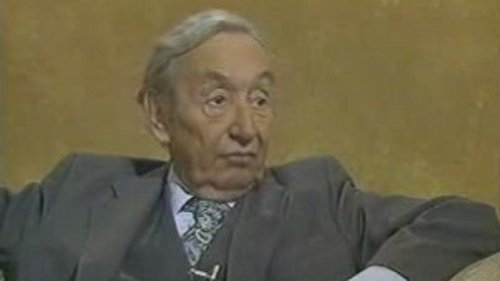
14. Frege, Russell and Modern Logic
42mBryan Magee talks to A.J. Ayer about Gottlob Frege and Bertrand Russell; specifically about their published works and their impact Bryan Magee talks to A.J. Ayer about Gottlob Frege and Bertrand Russell; specifically about their published works and their impact on philosophy itself.
Aired: 12/20/1987
15. Wittgenstein
44mBryan Magee talks to John Searle about the legacy of Ludwig Wittgenstein; ranging from his early work, the Tractatus, to his posthumously published, Philosophical Investigations.
Aired: 12/27/1987Recommended Anime




Advertisement





Similar Anime
Advertisement



Advertisement
Reviews (0)
Advertisement